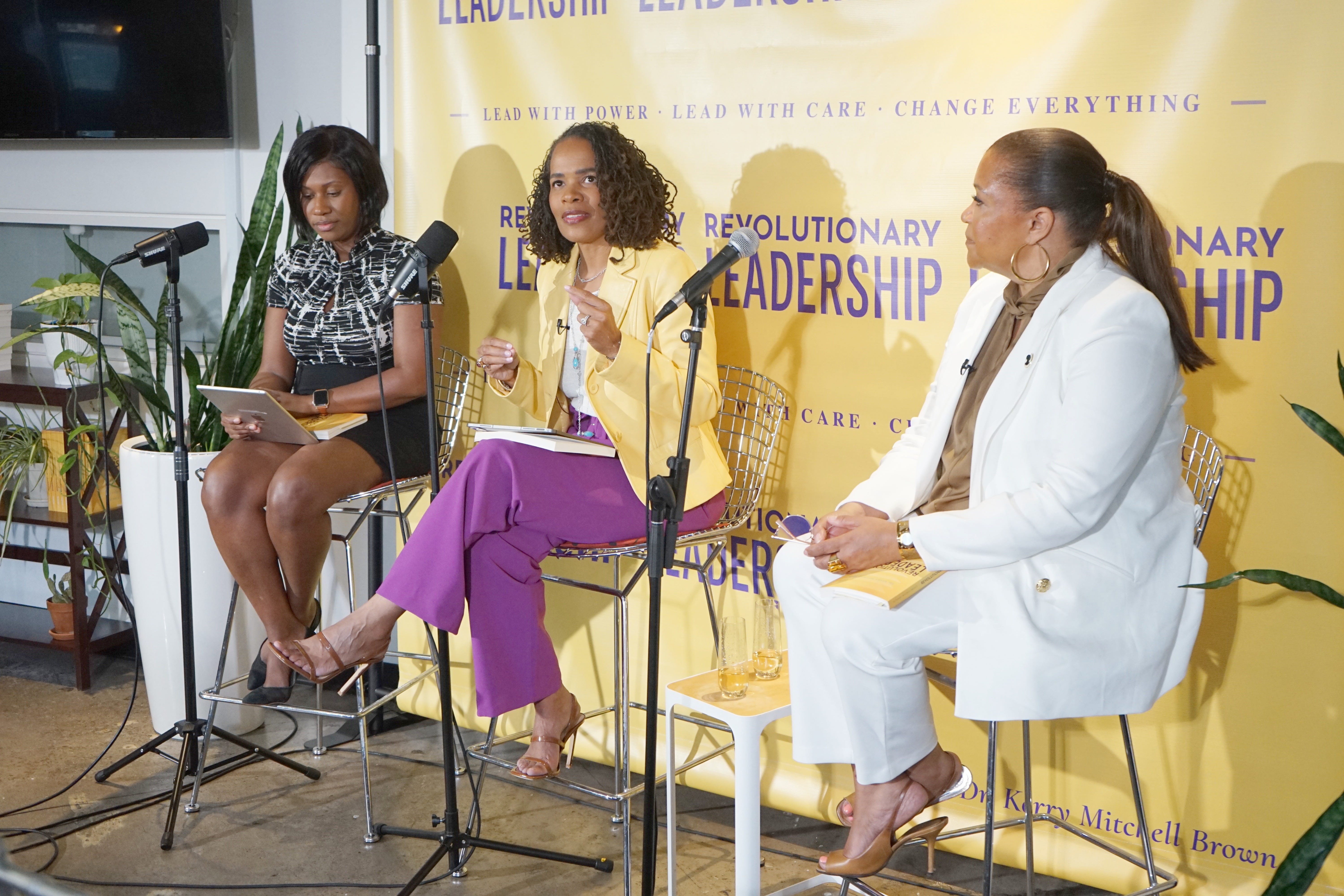
The first room was full of people. The second room was just my kitchen table, with two nine-year-olds who happen to be the reason any of this exists.
The Room: Revolutionary Leadership Live
On August 4th, I stood inside Prism Spaces in Chicago and watched two years of work become real. My book was finally in people’s hands. That room belongs to my oldest daughter, Olivia. She opened her doors and welcomed every single person in. I do not have the words for what that felt like.
It was not a quiet literary reception. DJ Smacks kept the room moving all night. We toasted with champagne. Taylor’s Tacos fed everybody. We sipped a cocktail built just for the occasion, the Revolutionary Leadership, made on Gigi’s Ginger Beer. This was a celebration, the way we do it.
Once the room was full, I sat down with Sasha-Ann Simons, who hosts In the Loop for WBEZ, NPR Chicago. My sister-friend Leilani Brown joined us too. She was my first guest back in Season One. She endorsed this book before a single stranger read a word of it. That night, she got to watch it land in a room full of people.
We talked about what it actually costs Black women to lead the way we do. Not the story about struggle. The story about what the research shows once you stop assuming struggle is the whole picture.
The women in my research carrying the most care responsibilities were the most successful. Not despite the weight. Because of it.
Here is the finding that stayed with me the longest. The women in my research carrying the most care responsibilities, mothering children they birthed or chose, caring for elders in their families, were the most successful. Not despite the weight. Because of it. They did not waste time. They did not live like they had unlimited capacity. So they decided who was going to get their energy, and who wasn’t.
Leilani brought her own edge to the room. She named something I think every Black woman in a corporation has felt and rarely said out loud. Truth tellers get treated like canaries in a coal mine. When we leave, organizations lose more than a person. They lose the person who was paying attention the entire time.
I closed the night reading the postscript from the book. It is for the people who show up. Who hold space without trying to fix everything. Who understand that loving a Black woman means protecting her peace, not her fragility. Because we are not fragile. We are just tired of fighting alone.
That is the room. Champagne, tacos, a DJ, and a truth or two that needed saying out loud.
The Table: A Birthday, and Nine Years of Watching
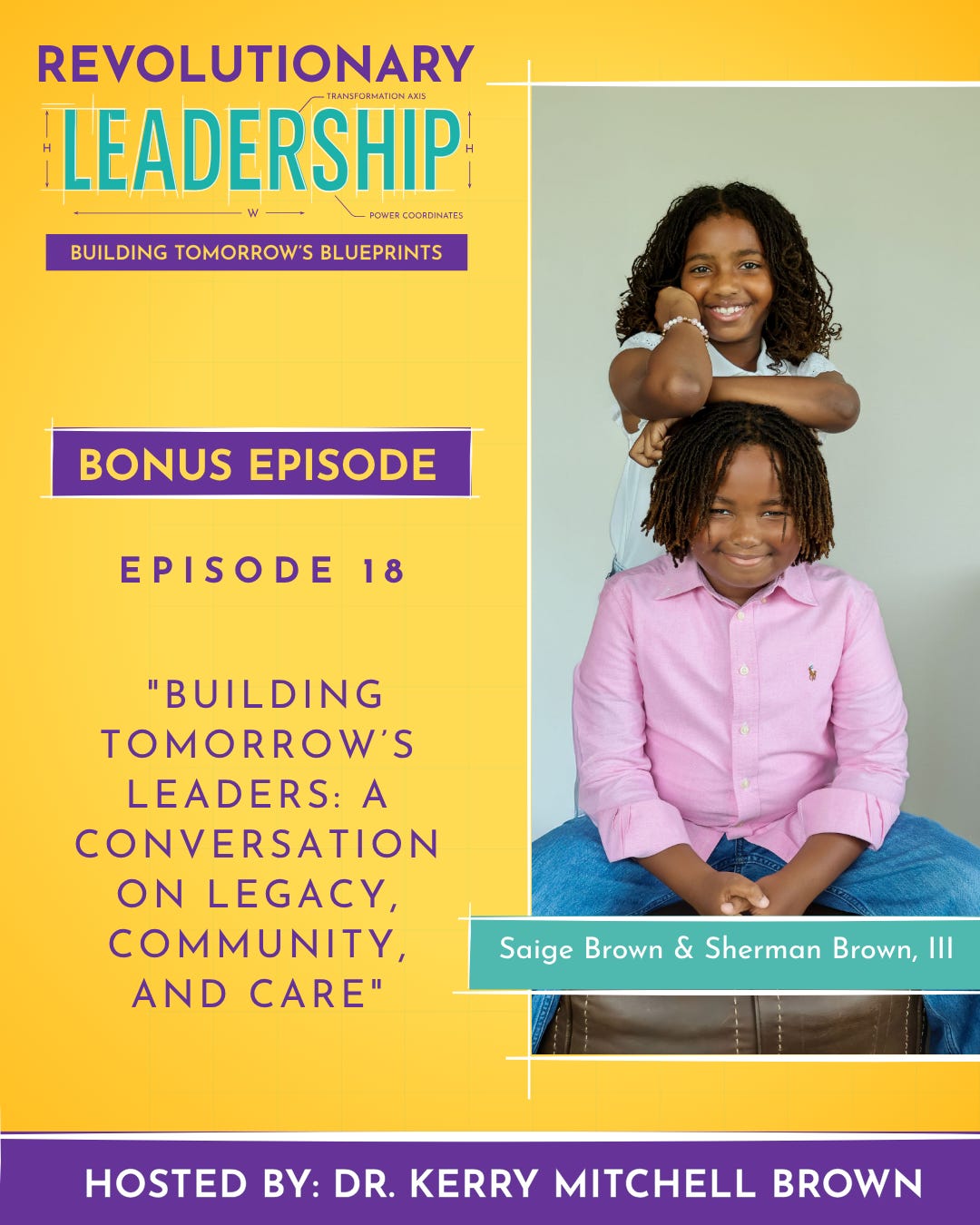
The second bonus episode has no audience at all. Just me, my twins, and a birthday one day away.
I asked Saige and Tripp a simple question. Where do you see Black women leading? Not in a textbook. Not even in my book. In their actual lives.
Saige named me first. She talked about how I feed them, get them to school, still do my work, and she called me a superhero. Then she named her teacher, Ms. Green, and said something I have not stopped thinking about. Teaching looks like a small job to some people. It is actually full of power. It builds minds.
Tripp named Ms. Green too, before Saige did. He talked about how she leads a classroom of kids who are, in his words, hard-headed, and keeps showing up anyway.
Saige named her big sister Olivia, who ran the book launch and made sure the food was right. She named her auntie Leilani, who wrote her own book about Black women. She named her auntie Charlene, who helped build my confidence when I needed it. She named Mom Nena, without me asking twice.
Tripp talked about Rosa Parks refusing to give up her seat on the bus. He talked about Harriet Tubman and the Underground Railroad, and how she helped people survive. He got her name wrong in the moment, the way a nine-year-old does when a fact is sitting right there in his memory. The history was right. The name just needed a second to catch up.
Black women can do it all. She did not need a book to know that. She has been watching one get written her entire life.
When I asked Saige what she wanted people to know about Black women leading, from a kid’s point of view, she gave me seven words. Black women can do it all.
She did not need a book to know that. She has been watching one get written her entire life.
Both bonus episodes are live.
Listen to the podcast
Apple Podcasts • Spotify • Amazon Music • Castbox • YouTube
Revolutionary Leadership: A Power Playbook for Black Women available now at revolutionarylead.com.
Join The Blueprint Circle — founding membership $120 for life, capped at 100 members. After that, it closes permanently. revolutionarylead.com